
Is Your Paintergrade Masking Tape Failing? How Do Temperature Changes Affect Its Grip?

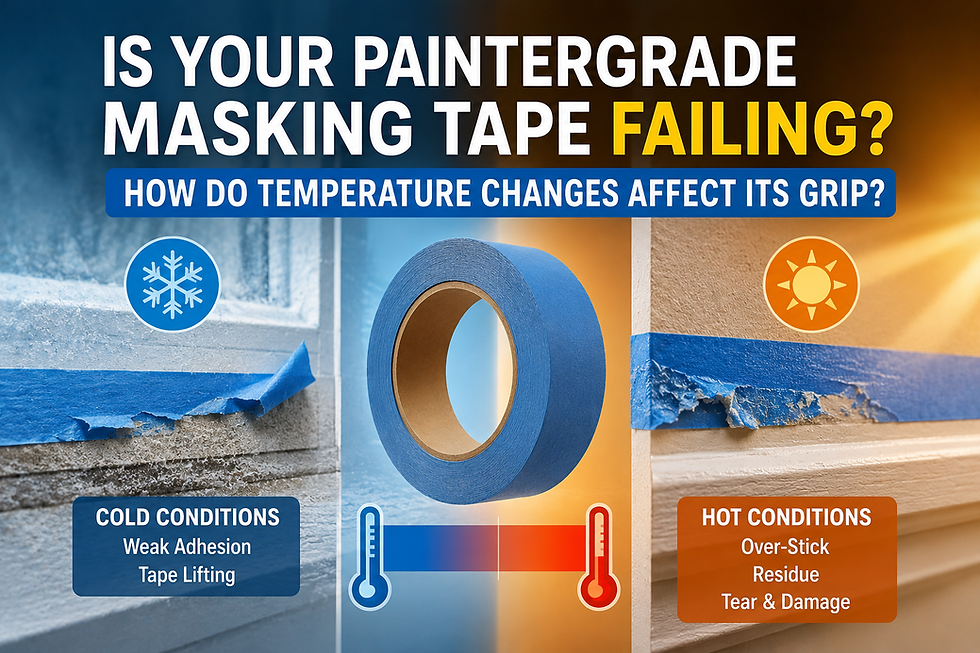
Have you ever put down a fresh roll of tape only to watch it slide right off the wall? Or worse, did it bake onto the trim and rip into a million annoying little pieces? Sudden weather shifts can easily trash your hard work by wrecking the sticky layer. If your paintergrade masking tape is acting up on the job, the temperature is usually the hidden troublemaker. Let us dive into the science of why this happens and how you can save your next project.
Why Does Cold Weather Make Your Tape Lose Its Stick?
When the temperature drops, tape adhesives go through a fast physical change that ruins their grip. Most masking rolls rely on pressure-sensitive glue that needs to stay soft and gooey to work. This softness helps the glue flow right into the tiny bumps and valleys of the wall. When winter weather hits, that sticky layer freezes up and becomes totally rigid.
This freezing effect completely destroys the ability of the tape to mold itself onto a clean surface. Even a premium painter grade masking tape will start peeling away from drywall or wood trim when it gets chilly. The cold turns the once-flexible adhesive into a brittle shell that just cannot hold its ground anymore.
Cold weather also makes the paper backing stiff and incredibly stubborn to unroll without ripping. You will notice the tape feels dry to the touch and loses its initial bite right out of the gate. Instead of stretching under stress, the frozen bond snaps instantly and leaves you with a sagging mess.
Is Extreme Heat Turning Your Adhesive Into a Messy Goop?
On the flip side, scorching summer heat brings a whole different set of headaches to your job site. Biting heat softens the adhesive polymers way too much and turns the glue into a runny, gummy mess. This gooey state triggers what pros call cohesive failure, which means the glue splits apart right down the middle.
When you try to peel the tape off a hot wall, it leaves a nasty layer of sticky residue behind. The paper backing will likely tear because the melted glue grips the wall tighter than it grips the tape. Plus, bright sunlight packs harsh ultraviolet rays that permanently bake the tape onto your expensive window frames.
High-heat environments also shrink your clean removal window from a few weeks down to just a couple of hours. The tape stretches out of shape while you pull it, which completely ruins your crisp paint lines. Hot weather forces the edges to lift up, letting wet paint bleed underneath and ruin your day.
Comparing Tape Performance Across Different Climates
Choosing the wrong roll for the weather will cost you a ton of time and extra money in rework. The table below shows how different adhesive bases handle various temperature scales on the job.
Adhesive Base Type | Minimum Application Temp | Maximum Operating Temp | Best Environmental Use |
Natural Rubber | 50°F (10°C) | 150°F (65°C) | Mild indoor residential rooms |
Synthetic Rubber | 45°F (7°C) | 160°F (71°C) | General commercial construction sites |
Modified Acrylic | 32°F (0°C) | 200°F (93°C) | Extreme seasonal outdoor variations |
Silicone Base | -50°F (-45°C) | 500°F (260°C) | Industrial high-heat masking tasks |
Let Us Upgrade Your Adhesive Toolkit Today
Getting a flawless look takes a good mix of patience, a steady hand, and top-tier supplies. At Hight Composites and Tapes, we build heavy-duty sticky solutions that stand up to the toughest weather shifts around. We also got tough Teflon cloth for high-heat factory insulation. Drop us a line today to check out our full lineup and upgrade your toolkit.
Frequently Asked Questions
Q: Why is my masking tape brittle and falling off in winter?
Ans: Cold air freezes the adhesive polymers and stops them from grabbing onto the texture of the wall. This stiffness makes the tape lose its natural stickiness and slide right off. Always bring your tape rolls up to room temperature before you start masking.
Q: Can direct sunlight cause tape to leave a sticky residue?
Ans: Yes, bright sun and high heat will bake the glue layer directly onto the surface. This harsh chemical breakdown makes the adhesive separate from its paper backing when pulled. Always use a UV-resistant tape if you are working outside in the sun.
Q: What is the best temperature range for applying masking tape?
Ans: Most standard project tapes work best when the air is between 60°F and 80°F. If you have to work in extreme weather, look for specialized all-weather options. These rolls use modified acrylic formulas that can handle the extra heat and cold.
Q: How does humidity affect tape performance alongside temperature?
Ans: High humidity introduces sneaky moisture that softens paper backings and ruins the glue bond. When you mix high humidity with high heat, the tape will sag and tear very easily. Keep your spare rolls sealed tight in a dry container to protect them.


Comments